Pronouns
A pronoun is a word used in place of a noun or noun phrase to avoid repetition and simplify sentences. Pronouns help refer to people, objects, places, or ideas without naming them explicitly each time. There are seven main types of pronouns: personal, possessive, reflexive, demonstrative, interrogative, relative, and indefinite pronouns
Subject Pronouns
Definition:
Subject pronouns are used when the pronoun acts as the subject of a verb in a sentence. Such as- I, You, He, She, It, We, They
Usage:
- As the subject of a verb
Examples:
– You are kind.
– He/She/It is coming.
– We like chocolate.
- After the verb ‘to be’
Examples:
– It is he in the picture. (formal)
– It’s him in the picture. (informal)
– It could not have been they at the party. (formal)
– It could not have been them at the party. (informal)
⚠️ IMPORTANT: Always use the formal version in your exams
- When comparing the subjects of two clauses
Examples:
– My friends are taller than they (are).
– She runs faster than I (do)
- After ‘as’ and ‘that’ in subject clauses
Examples:
– Everyone believes that he deserves the award.
– The new manager is as experienced as she (is)
Object Pronouns
Definition:
Object pronouns are used when the pronoun receives the action of the verb or follows a preposition. Such as- Me, You, Him, Her, It, Us, Them
Usage:
- As the direct object of a verb
Examples:
– The teacher praised him for his effort.
– I met her at the conference.
- When comparing the objects of two clauses
Examples:
– He trusts you more than me.
– They chose him over me for the project
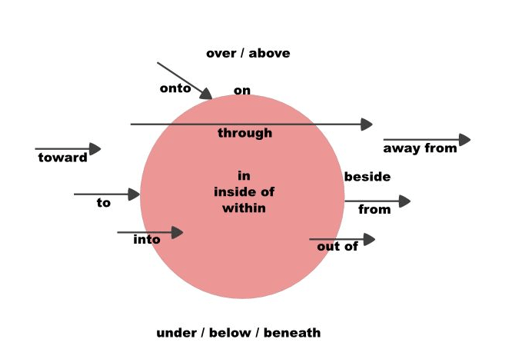
- After prepositions
Examples:
– She sat next to us during the meeting.
– The manager assigned the task to me.
Note:
If the preposition starts a new clause, use a subject pronoun because it becomes the subject of that clause.
Example:
✅ They arrived after she sent the message.
❌ (Incorrect: after her sent the message)
POSSESSIVE ADJECTIVES
A possessive adjective modifies a noun to show ownership or belonging. It comes before the noun it describes. Common Possessive Adjectives: My, Your, His, Her, Its, Our, Their
Usage:
- To indicate ownership by modifying a noun
– My phone is on the desk.
– He forgot his laptop at home.
- To modify a gerund (verb + -ing used as a noun)
– The coach was annoyed by my arriving late.
– We were impressed by her handling of the situation.
POSSESSIVE PRONOUNS
A possessive pronoun replaces a noun phrase that includes a possessive adjective + noun, to avoid repetition. Common Possessive Pronouns: Mine, Yours, His, Hers, Its, Ours, Theirs
Usage:
- To replace a possessive adjective + noun
– This pencil is mine. (= my pencil)
– Their apartment is large, but ours is cozy. (= our apartment)
– His proposal was strong, but hers was even better. (= her proposal)
- After the preposition “of” to show one of a group
– Maria is a friend of mine. (= one of my friends)
– That musician is a favorite of hers. (= one of her favorites)
- After the verb “to be”
– That notebook is mine.
– Is this umbrella yours?
- To replace the second possessive adjective + noun in a comparison
– His test results were higher than hers. (= her test results)
– Their house is newer than ours. (= our house)
Reflexive Pronouns
Reflexive pronouns are used when the subject and the object of a sentence are the same person or thing. They can also be used to emphasize that someone did something alone or without help. Common Reflexive Pronouns: Myself, Yourself, Himself, Herself, Itself, Ourselves, Yourselves, Themselves
Usage:
- When the subject and object are the same person
– She taught herself to play the piano.
– He blamed himself for the mistake.
- To emphasize that the subject did the action alone
– I prepared the meal myself.
– They fixed the car themselves.
– She herself delivered the message to the principal.
- After the preposition “by” (to mean “alone” or “without help”)
– The child went to school by himself for the first time.
– I enjoy reading by myself in the evenings.
Relative Pronouns
Relative pronouns are used to connect a clause or phrase to a noun or pronoun. They provide more information about the noun without starting a new sentence.
Common Relative Pronouns: Who, Whom, Whose, Which, That
Examples:
Who – used as the subject of a clause
– The girl who won the contest is my cousin.
– That’s the teacher who helps us after class.
Whom – used as the object (formal or written English)
– To whom did you give the invitation? (formal)
– Who did you give the invitation to? (spoken)
Whose – shows possession
– The boy whose bike was stolen is upset.
– She has a friend whose brother is in college.
Which – refers to things or animals
– The book which you lent me was fascinating.
– Her dog, which is very friendly, followed me home.
That – can refer to people, animals, or things (used in essential clauses)
– This is the movie that I told you about.
– The child that won the race is my neighbor.
Indefinite Pronouns
Indefinite pronouns are words we use to talk about people or things in a general way, without saying exactly who or what they are.
Common indefinite pronouns include:
People: anybody, everybody, nobody, somebody, anyone, everyone, no one, someone
Things: anything, everything, nothing, something
How to use them:
- Pronouns for people (end in -body or -one)
Example –Everyone arrived on time.
-There was no one at the bus stop. - Pronouns for things (end in -thing)
Example – Nothing can stop us now.
– She packed everything she needed. - Using ‘else’:
Add else to mean other people or things:
Example: I don’t want to go. Ask someone else.
– Nobody else volunteered to help.
⚠️ Be careful:
- In negative sentences, use pronouns with no-, not any-:
Correct: Nobody called. (NOT Anybody didn’t call.)
Correct: Nothing changed. (NOT Nothing didn’t change.) - Don’t use double negatives:
Correct: Nobody knows the answer. (NOT Nobody doesn’t know the answer.)
Correct: Nothing happened yesterday. (NOT Nothing didn’t happen.)